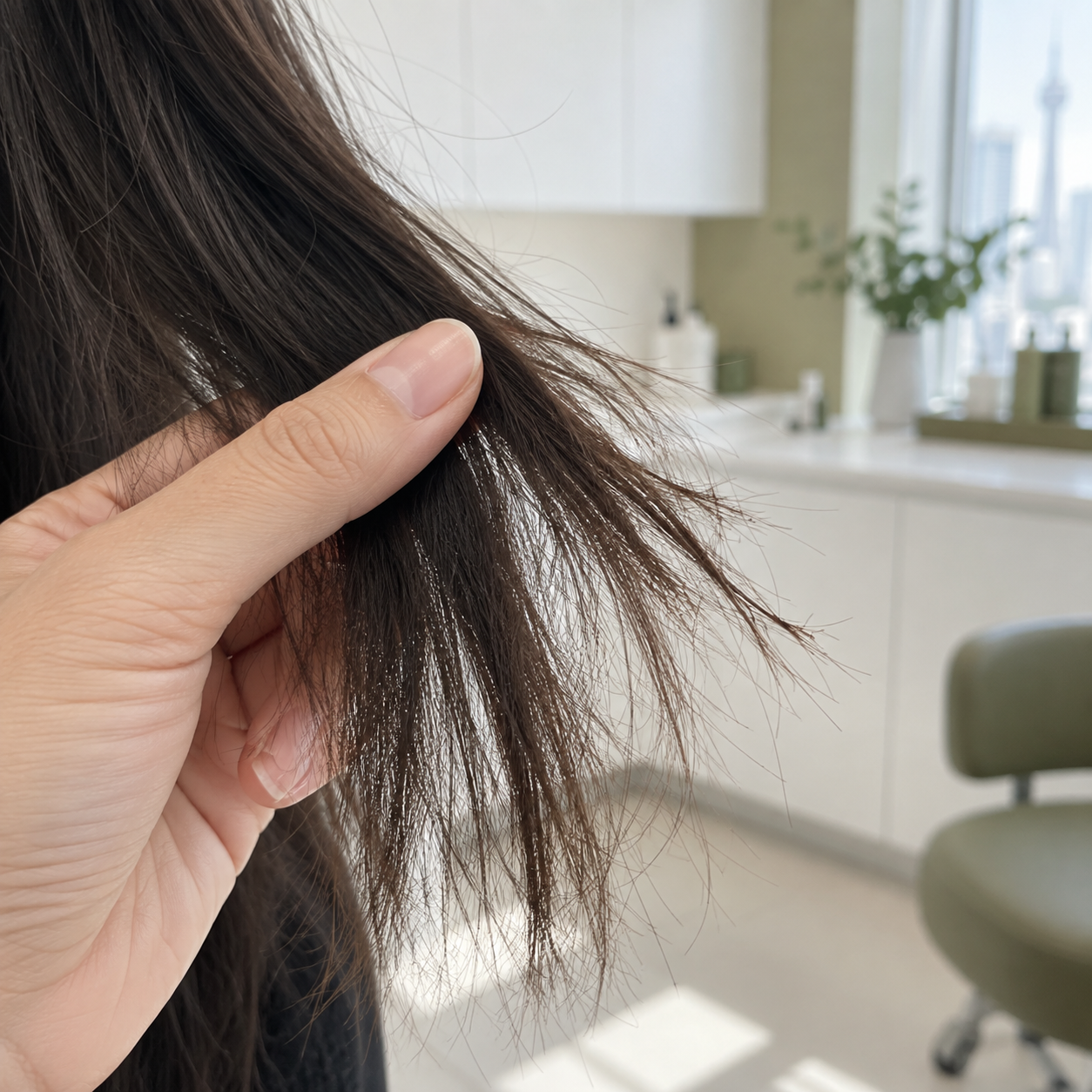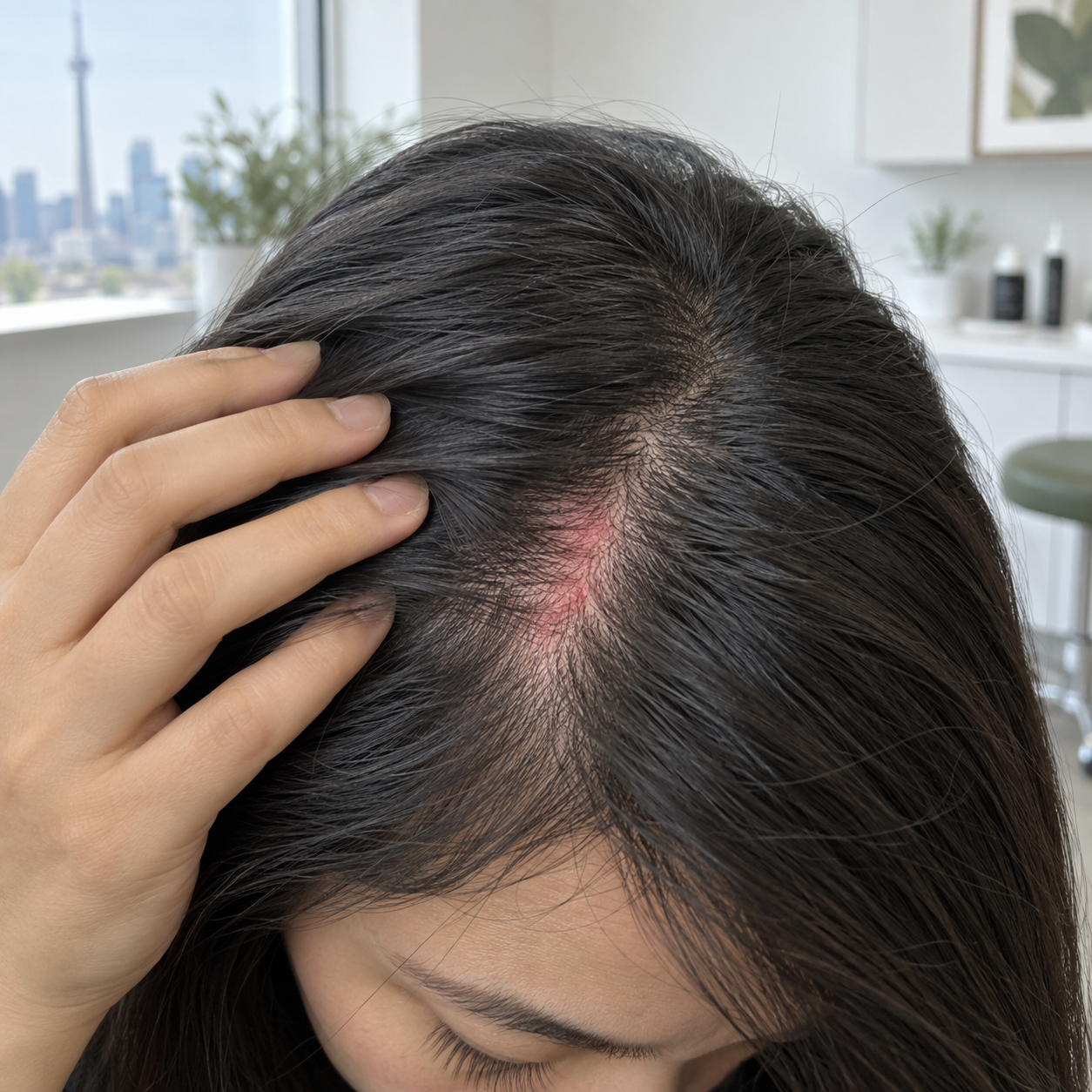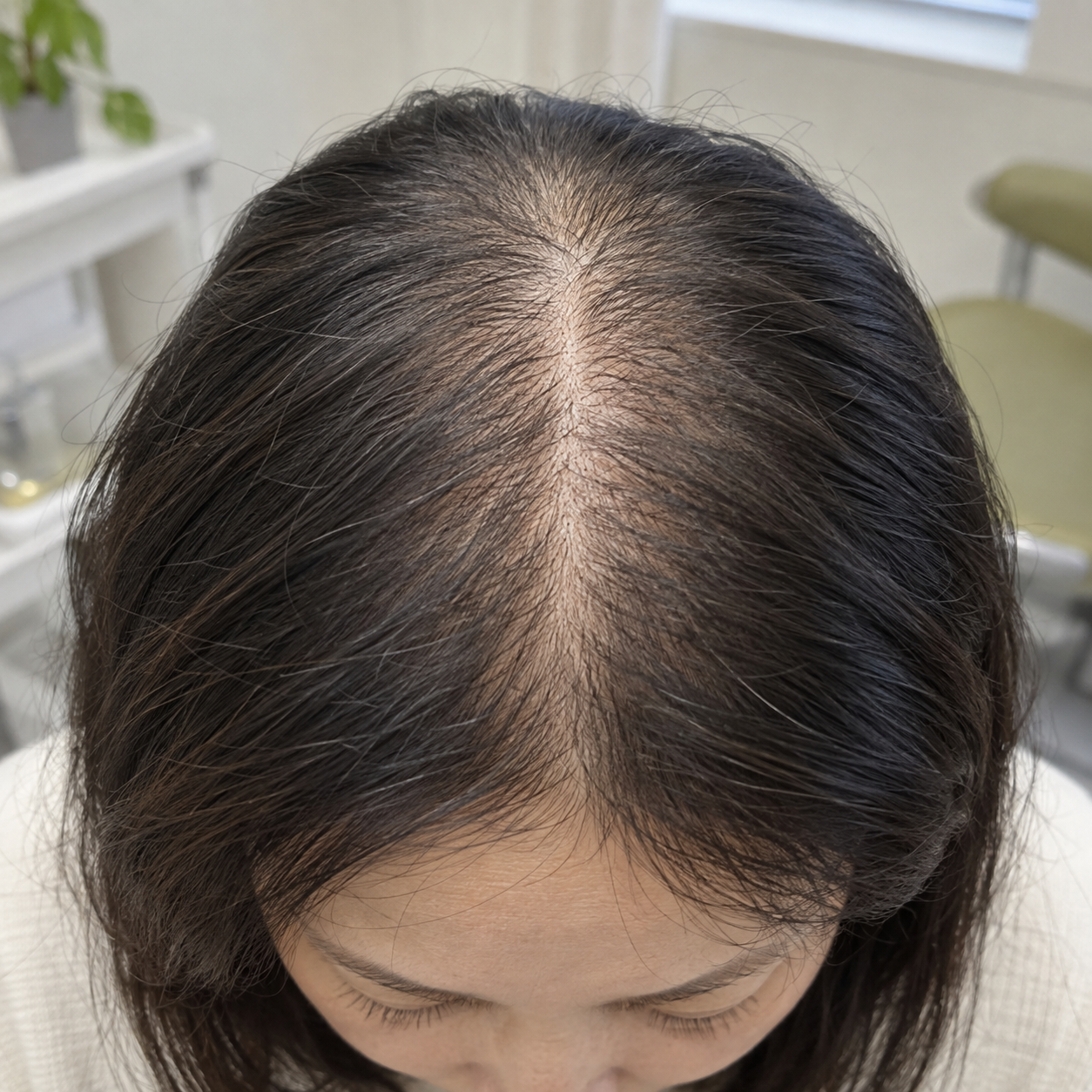
A wider part, a smaller ponytail or more hair in your brush can leave you wondering what has changed. Start by noticing whether your hair looks thinner at the roots, sheds more than usual or breaks along the lengths.
Less fullness does not always mean the same thing
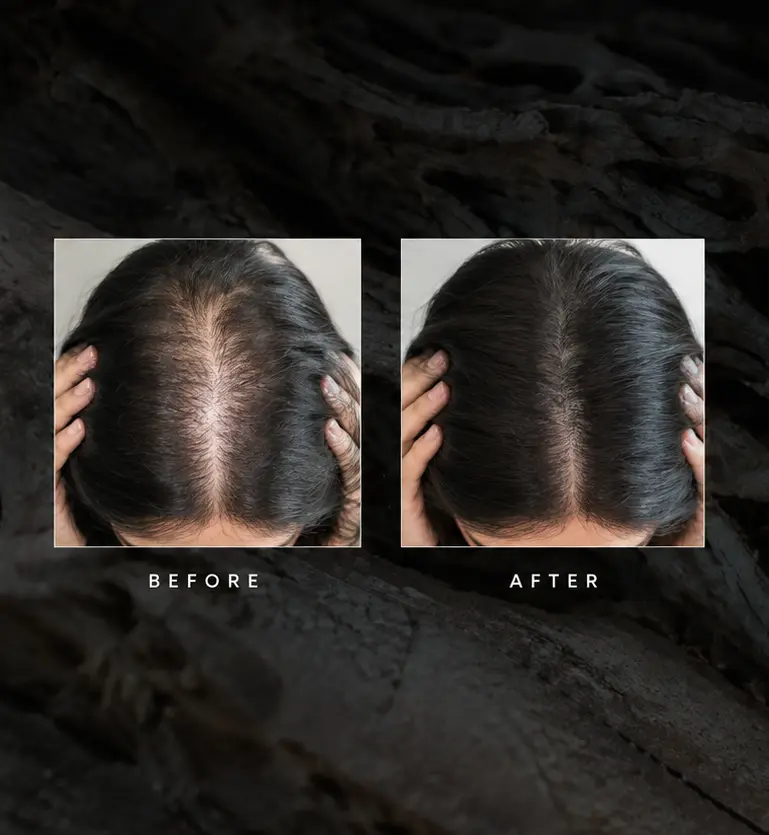
Gradual thinning, increased shedding and broken strands are different observations. Hereditary hair loss can develop gradually; illness, childbirth or other stressors may be followed by increased shedding. Tight styles can cause traction-related loss, while damage along a strand causes breakage. These can coexist. A scalp photograph cannot identify the cause on its own.
Source: American Academy of Dermatology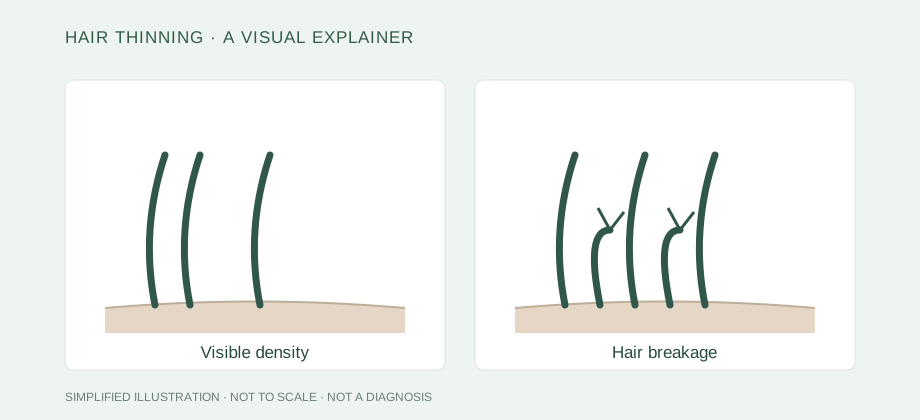
Before your visit
A few things worth noticing
You do not need to work out the cause yourself. These details simply give us a clearer place to start.
- The pattern
- Is your part gradually widening, or is the change concentrated in one area?
- The timing
- When did you first notice it? Record any recent changes to your health or routine.
- The strands
- Do you notice longer shed hairs, shorter broken pieces, or both?
Between visits
Practical steps for your routine
- Record when the change started and whether it is gradual, patchy or widespread. Photos taken under similar lighting can help document change.
- Reduce pulling from tight hairstyles and handle the lengths gently.
- Arrange medical advice for unexplained or worrying hair loss before relying on a cosmetic treatment. Do not assume a scalp-care service will restore growth.
Care at Dr.Scalp
Finding the right care for you
Your visit starts with what you have noticed: when the change began, how your routine has changed and how your scalp feels. We then take a closer look at the scalp. Digital images help document its appearance and inform cosmetic care, but cannot diagnose hair loss.
A place for traditional herbal care
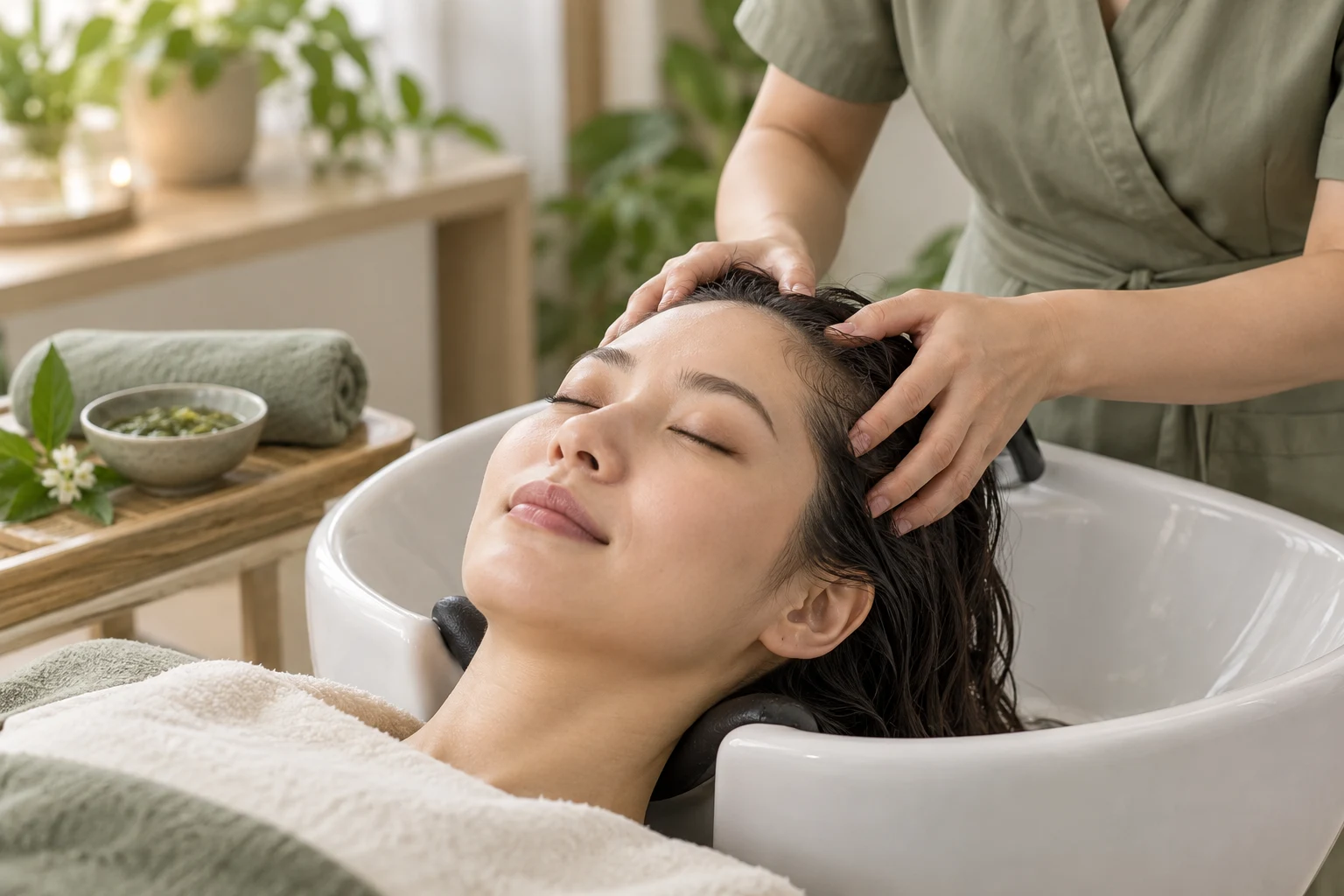
The Anti-Hairloss Treatment includes herbal cleansing and may include steam and serum application. These are supportive scalp-care steps, not a promise of regrowth. A medical treatment plan may be needed alongside cosmetic care.

Selected for your visit
Share any sensitivities and the products you currently use. We will talk through the preparations and care steps with you before starting.
Your next step
Care options to explore
These are cosmetic scalp-care options, not a diagnosis or treatment for a medical condition. Suitability is discussed before care begins.
Sources & further reading
American Academy of Dermatology — Hair loss: causes
Educational information updated October 8, 2026. Service options reflect the Dr.Scalp treatment menu; suitability is discussed during your visit.